
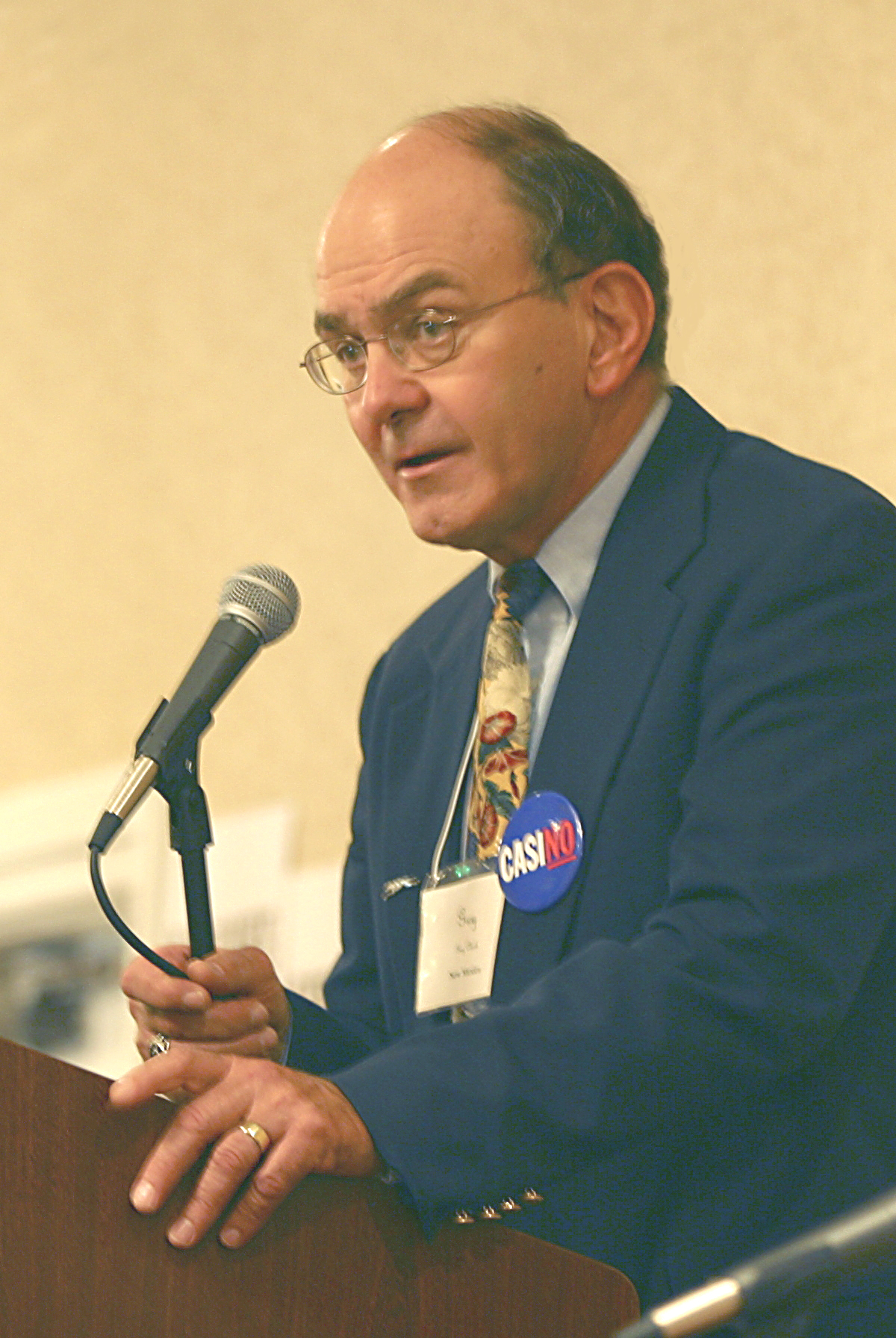
Guy Clark

2018 GAMBLING REVENUE IN NEW MEXICO

2018 GAMBLING REVENUE IN NEW MEXICO

As reported in the AP, the New Mexico Legislative Finance Committee recently reported that tribal casino declined in New Mexico from $69.7 million in 2012 to $62.8 million in 2018, which is about a ten percent decline. They also reported that non-tribal gambling (mostly racetrack) declined in the same time period from $63.4 million to $61.6 million.

Although racetrack data is electronically transferred to the gaming control board on a real-time basis, the tribes do self-reporting without any rigorous state oversight. If the tribes report less revenue, they don’t have to pay as much revenue sharing to the state.
It’s encouraging to consider New Mexicans losing less money to predatory gambling interests, and the Pojoaque and Mescalero casinos have been flirting with bankruptcy from time to time, which could hopefully point to less gambling damage in the future.

The last couple of years the New Mexico Racing Commission has been flirting with the idea of approving a sixth racetrack license in one of several potential locations. All five of the current racetrack license holders are opposed to their issuing another license, largely consistent with the decline in track revenues. It makes no sense at all to issue another license, but wealthy gambling interests still want a portion of that shrinking pie.

Lottery income is another issue altogether. They reported a 6% INCEASE in income during 2018, even though they have been vigorously lobbying the legislature to give them Online lottery games to expand even further their growing revenue. You wonder if this is to help offset the 26% pay increase they have approved for lottery CEO David Barden.

An article in the Albuquerque Journal about the lottery can be found by clicking here.

It’s easy to see who are the winners in these scenarios: Gambling industry developers and management. The losers are the citizens of New Mexico 100% of the time.

It’s time for the government to get out of the predatory gambling racket.
Guy Clark2018 GAMBLING REVENUE IN NEW MEXICO
read more

STATE AND POJOAQUE SPLIT ILLEGAL GAMBLING REVENUE

As reported in the Albuquerque Journal this morning, Gov. Michelle Lujan Grisham’s administration and the Pojoaque Pueblo have approved a federal court decision to split up the sequestered roughly $10 million 60/40 that was put in a holding account after the pueblo signed the 2015 tribal gambling compacts in 2017.

Pojoaque Pueblo refused to sign the 2015 compacts, signed by all other gambling tribes, saying the governor did not negotiate in “good faith.”  They protested the increase in revenue sharing from the previous compacts, and also wanted to allow 18 year-olds to gamble, alcohol to be served on the gambling floors, and the ability to cash welfare, Social Security and payroll checks.

The tribe fought legal battles in federal courts, but ultimately lost in 2017, and thereafter signed the 2015 compacts.  In the two-year interim the tribe had been forced by the feds to put the disputed revenue sharing in a holding account until the dispute was resolved.  The tribe argued that they needed the money for social programs and other tribal expenses, but the court ruled that the money would be split 40% for the tribes, and 60% for the state.

Governor Grisham’s chief counsel, Matt Garcia, was said to have conducted a risk assessment, and said that, “this outcome was undeniably most favorable for the state.”

Governor Lujan Grisham received about $11,000 from the pueblo in the recent gubernatorial election, as well as contributions during her two successful campaigns for the U.S. House of Representatives.  Her representatives said that these donations had nothing to do with signing an agreement that returned over four million dollars of illegal gambling revenue to the pueblo.

The lesson learned here seems to be that if tribes fight the state long and hard enough, they are going to get a lot of what they want from the state.  They certainly got a much better deal than the other tribes who paid their contracted revenue sharing to the state during those two years.

It’s time for the state to get out of the predatory gambling racket.
Guy ClarkSTATE AND POJOAQUE SPLIT ILLEGAL GAMBLING REVENUE
read more

NM Gaming Control Board Meeting – Thursday, May 23

The New Mexico Gaming Control Board will be meeting on Thursday, May 23 for their executive session at 9:00 am.  The open session, to which the public is invited, will commence after the executive (closed) session, probably about 10:00 am.  They usually invite audience participation, so come with questions.

Guy ClarkNM Gaming Control Board Meeting – Thursday, May 23
read more

Revenue Stabilization And Tax Policy Committee Meeting October 30 On Sports Betting

****ACTION ALERT– REVENUE STABILIZATION AND TAX POLICY COMMITTEE MEETING OCTOBER 30 ON SPORTS BETTING****

The Revenue Stabilization and Tax Policy Committee will meet on October 30, 2018, and the last item on their agenda will be sports betting.  They will be meeting in the State Capitol in Santa Fe in room 322.  It appears that they are taking a favorable position on this issue.

We need to have representatives there to express our opposition to this form of gambling being introduced to our state.  Please attend and be prepared to express your opinion.

Guy ClarkRevenue Stabilization And Tax Policy Committee Meeting October 30 On Sports Betting
read more

Contact AG Balderas About Santa Ana Sports Betting Parlor

****ACTION ALERT–CONTACT AG BALDERAS ABOUT SANTA ANA SPORTS BETTING PARLOR****

Santa Ana Pueblo opened a sports betting operation in the Santa Ana Star Casino Tuesday, October 16, 2018.  This action by Santa Ana pueblo violates the Indian Gaming Regulatory Act passed by Congress in 1988.  IGRA Section 2710 (d)(1)reads, ” Class III gaming activities shall be lawful on Indian lands only if such activities are–(B) located in a State that permits such gaming for any purpose by any person, organization, or entity...”  It is clear in IGRA, the legal foundation for all tribal gambling, that for a tribe to adopt a gambling activity it must already be legal off-reservation in that state.  Sports betting is not legal in New Mexico, therefore Santa Ana’s sports betting operation would violate the Indian Gaming Regulatory Act.

The Mississippi Band of Indians have opened a sports betting operation after complying with state law.  Oklahoma is working on legislation to legalize sports betting on the reservation.  A handful of other states, including California and Connecticut, have tribes encouraging legislation legalizing tribal sports gambling, but none of the aforementioned tribes have attempted a fait accompli, springing it on their state without proper coordination with their state. These tribes have all recognized the IGRA requirement to follow state precedent, and follow  proper regulatory procedures.

If Santa Ana is successful in operating a sports betting parlor with no regulatory confirmation by the state, the other New Mexico tribes will certainly follow suit.  This would be the introduction of a whole new form of gambling in addition to the plethora of gambling already exploiting the citizens of the state, without proper regulatory approval.  This form of gambling is especially addictive with teens and young adults.  We already have way too much gambling addiction in the state.

States that have legalized commercial sports betting are usually moving into Online sports betting.  This is the beginning salvo in New Mexico that would certainly lead to Online sports betting in our state.  We must stop this at the ontset.

Hector Balderas, the New Mexico Attorney General has the power to sue Santa Ana Pueblo in federal district court and ask for a cease and desist order. The sports betting operation is clearly violating federal and state law.  Please contact AG Balderas and ask him to take Santa Ana Pueblo to the federal district court and get it shut down.  His phone number is Toll Free 1-844-255-9210.  You will most likely be talking to an assistant, but you can ask him/her to pass along the message to the AG to take Santa Ana Pueblo to court to get a stay.

****PLEASE CALL AS SOON AS POSSIBLE****

Guy ClarkContact AG Balderas About Santa Ana Sports Betting Parlor
read more

SPGNM Chairman Meets With SPG Leaders

Dr. Guy Clark, chairman for Stop Predatory Gambling New Mexico participated in a phone conference with the national organization, Stop Predatory Gambling, on October 15, where he reported on the opening of the sports betting operation at the Santa Ana Star Casino.  He reported proposed action to try to get it shut down.

Guy ClarkSPGNM Chairman Meets With SPG Leaders
read more

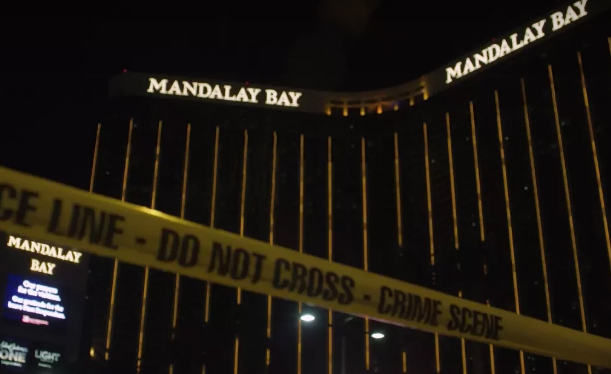
Gambling Addiction The Spark That Set Off The Mandalay Bay Casino Massacre

The Las Vegas Police Department released their final report on the deadly shooting spree carried out by Stephen Paddock from the 32nd floor of the Mandalay Bay Casino Hotel that killed over fifty people and injured over 600 others. They seem mystified about why Paddock would do such a thing.

Reports indicate that Paddock’s wealth diminished from about two million dollars to about half a million in his last two years of his life, much of which was lost to gambling. Sycophants of the gambling industry, the shills that write for or about the casinos, referred to Paddock as a “responsible gambler,” or a “professional gambler.” Video poker, his favorite game, produces no experts. Computer programming determines the outcome of every game the instant the “Play” button is pushed. The cards the player uses has zero influence on the outcome of the game. The computer is not limited to a 52-card deck, so it can use any cards desirable to get the predetermined outcome. Video poker does not produce “professional gamblers,” only consistent losers.

The truth is that Stephen Paddock was a gambling addict that had his life destroyed by his gambling addiction. Several psychologists, including Phillip Kronk, M.S., Ph.D., have described Paddock as a gambling addict whose life was out of control.

Gambling addicts who have had their lives ruined do extreme things, with an alarming number of them taking human life–usually their own. The suicide rate among gambling addicts is three times higher than the suicide rate among cocaine addicts, and about 80% of gambling addicts carry out ideation of their own suicide, concocting elaborate, specific scenarios of their death. Paddock was an extreme example of the self-destructive inclination of gambling addicts by taking many lives with him. We can speculate about why he took this unusual, extreme course, but the fuse that set it off was gambling addiction.

To many people, and a fair number of experts, all of this is fairly obvious. Why did the Las Vegas Police Department fail to recognize this explanation? The gambling industry, including casinos, is a corrupting influence. Many writers have written about the corrupting influence that the casino gambling has had on the governmental and social institutions in Las Vegas, including the police force (eg., “New Documentary Reveals Major Coverup and Corruption in Las Vegas Police Department,” Liz Posner, Alternet). They are heavily invested in keeping the well-oiled gambling machine working smoothly, pulling in the tourists and generating their salaries and pay-offs.

The gambling industry talks about “responsible gaming” and “entertainment gamblers,” but they are superfluous to their business model. It is swell established that over half of their income comes from problem gamblers. Their business model is dependent on gambling addicts. Their prosperity–even their very survival–depends on gambling addicts. Any institution that routinely and callously destroys lives to increase their wealth produces monsters.

Monsters, like the executives at MGM Mandalay Bay Casino, care little that their actions ruin lives and contribute to the death and misery of many people. If that sounds extreme, consider the law suit that MGM Resorts International has lodged against the families of the dead and injured in the massacre that took place outside their hotel. Not only do the victims have to deal with their initial grief and loss, but they now face legal action against them that will subject them to more emotional and financial trauma.

Three sentences encapsulate the story around the police report. Stephen Paddock was a gambling addict. Gambling addiction was the spark that ignited the massacre at the MGM Mandalay Bay Hotel. The Las Vegas Police are doing a “whitewash” to cover up the true cause of the massacre to protect the gambling industry in Las Vegas.

It’s time for the government to get out of the predatory gambling racket.

Dr. Guy Clark, chairman
Stop Predatory Gambling New Mexico

Guy ClarkGambling Addiction The Spark That Set Off The Mandalay Bay Casino Massacre
read more