
The Philadelphia City Council voted 17-0 against adding new forms of predatory gambling in their community.
Stop Predatory Gambling, along with strong local allies, had called upon the City Council of Philadelphia to opt-out of a new Pennsylvania state program that could allow mini-casinos to set up shop in Philadelphia. A mini-casino can have between 300 and 750 slot machines. Also allowed could be truck stop casinos, each with five video game terminals.
Joining Stop Predatory Gambling in this request was Liberty Resources, Inc.; Asian Americans United; Arch Street United Methodist Church; and, Casino-Free Philadelphia.
In a letter educating the City Council about the issue, the groups wrote:
“Slot machines are highly addictive. Gambling operations prey on low-income and fixed-income residents, including seniors, people with disabilities and other vulnerable populations. This is not just regressive, predatory exploitation; it is counterproductive to a healthy economy.”
Click on the link below for a copy of the letter:
Opt out of more slot machines in Philadelphia communities letter
From The Atlantic Monthly in December 2016: “How Casinos Enable Gambling Addicts”


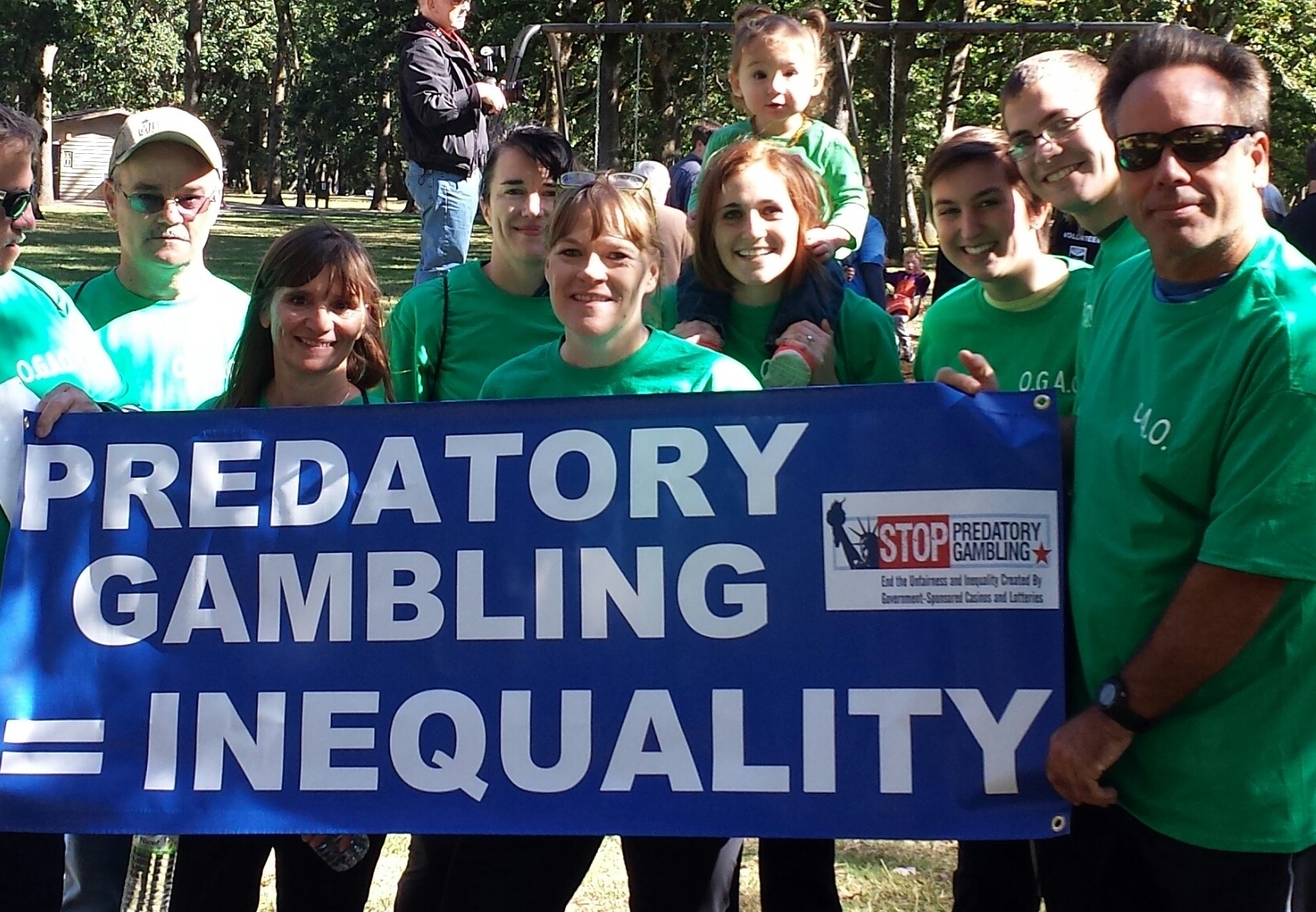
To spotlight the 40 million Americans harmed by the greed of big gambling operators and to prevent more victims, we are organizing the National Week of Action to Stop Predatory Gambling, Sept. 29- Oct. 5, 2024.
At least 100 actions will be happening across America and the world during the week.
We are calling for 100% participation from you and everyone who wants a future better than the one predatory gambling offers us. It’s an opportunity for thousands of citizens across the US and the world to act together to confront the unjust and dishonest policy of predatory gambling.
Do your part. Please commit two hours to participate locally in some way during the week of 9/29-10/5. If you can’t commit the time, then please participate by making a gift of $25 or more tax-deductible to support our work locally.
Possible Actions Include: The “action” can be anything you (or your group) want it to be. It could be a prayer vigil, a sign-holding visibility with homemade signs, participating in a “Freedom Players” event at a regional casino (or at a local restaurant/tavern with video gambling machines)…the ideas are limitless.
Also, here is a brief, effective guide that we put together with the Alabama group about how to organize a prayer vigil in your place of worship that weekend.
If you want to stop the harm that predatory gambling inflicts upon your community, then you personally need to act. Don’t think it will happen without your sacrifice because it won’t.
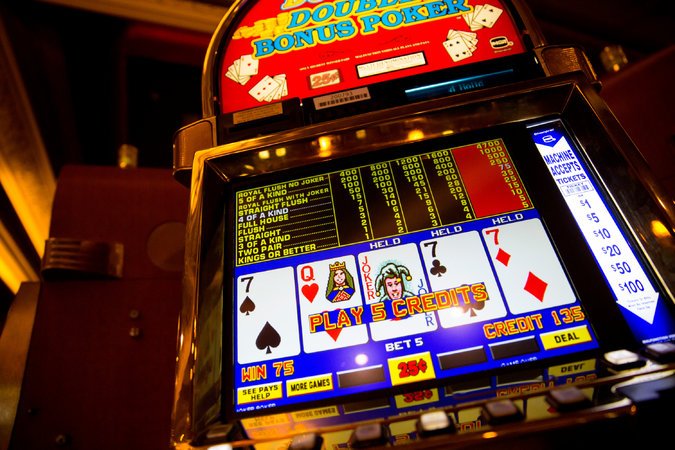
Las Vegas shooter Stephen Paddock had a serious gambling machine addiction. Read the latest New York Times story on his gambling behavior. Electronic gambling machines were at the center of his life.
Yet news coverage continues to use terms like “professional gambler” when describing Paddock. He was not a professional gambler.
No professional gambler uses slot machines and video poker machines like Paddock did. The machines create the illusion of skill but a user is mathematically guaranteed to lose all their money the longer they play them. Once you press the button on the machine, there is no skill involved. The computer inside the machine (known as the Random Number Generator) decides whether you lose or win. The player has no control over the outcome.
The image below is from the landmark book investigating electronic gambling machines Addiction By Design (Pg 112):

The business model of casinos is based on people like Paddock losing over and over again. While he may have won occasionally, it’s a statistical certainty that he lost huge sums of money the longer and more frequently he played as the graph above shows.
Paddock was playing hundreds of hands per hour (about one hand every six seconds) for many hours straight. Almost day after day.
No credible gambling addiction expert unaffiliated with gambling operators and independently-funded would describe him as a “responsible gambler.” ‘Responsible gambling’ is little more than a marketing slogan made up by commercialized gambling operators and their partners. Its intent is to place the spotlight on the citizen and away from their predatory and fraudulent business practices.
Whether Paddock’s out-of-control addiction to electronic gambling machines was a central factor in what happened last Sunday will be determined by the FBI investigation. But news coverage and public discussion should not normalize Paddock’s single-minded obsession with gambling machines and the exploitive business practices used by the casinos to keep Paddock gambling continuously.
Les Bernal, National Director, Stop Predatory Gambling
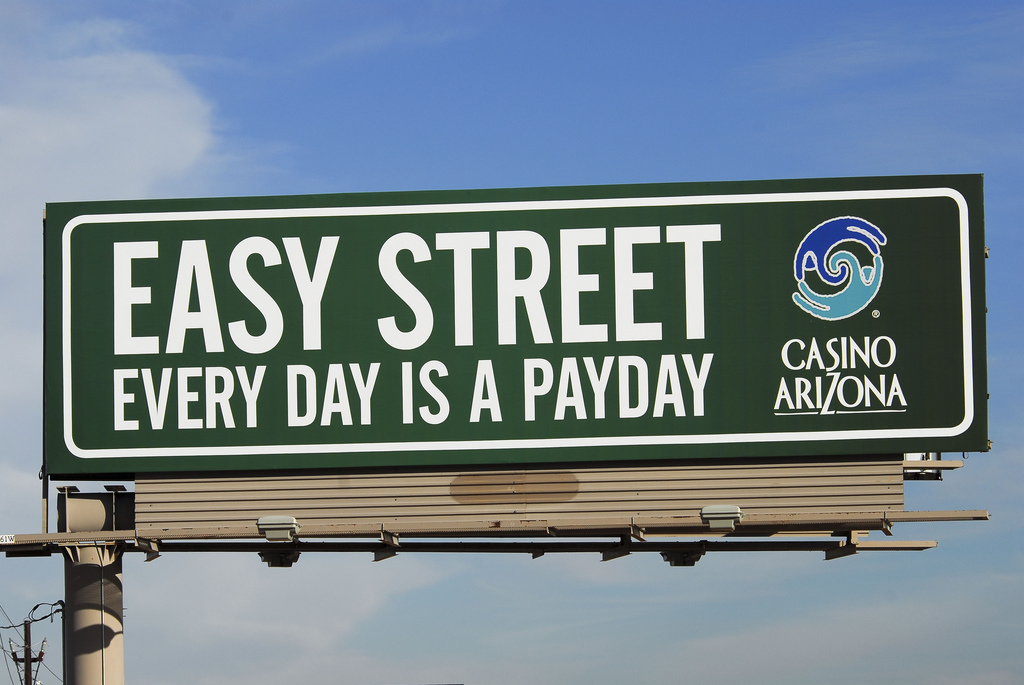
Predatory gambling is when corporate gambling interests partner with government to cheat and exploit citizens. It ultimately forces the taxpayers who don’t gamble to foot the bill for the long-term public budget problems that result.
It’s a form of consumer financial fraud like price gouging and false advertising and it causes life-changing financial losses for tens of millions of citizens. Over the next eight years, the American people are on course to lose more than $1 trillion of their personal wealth to government-sanctioned gambling. At least half of this personal wealth – $500 billion – will be lost to state lotteries.
Predatory gambling is America’s biggest most-neglected problem.
The almost sole focus of state-sanctioned gambling has been to maximize profits, not protect the public interest. It’s exempt from truth-in-advertising laws, giving gambling corporations wide latitude to market gambling, grossly exaggerate chances of winning and aggressively lure citizens to lose their money.
Let people gamble if they want, some may say. But we already have the freedom to gamble. Up to now, many Americans participate in office pools for the Super Bowl, NCAA March Madness brackets, make casual wagers on the golf course with their friends, or play a Friday night poker game.
These informal events are examples of social gambling. There is no “house” skimming a large profit, guaranteeing the participant will inevitably lose over the long-term. No one is wagering continuously at rapid speeds of every five seconds, for hour after hour. Very few people feel an intense “buzz” or high from the experience. There’s no aggressive and deceptive marketing to get people to gamble more often with bigger sums of money. No one is lending or borrowing cash to participate or ends up losing their entire pay check. It doesn’t go on all day, every day of the week, year round. And it doesn’t require the majority of Americans who rarely gamble to subsidize it with any of their own money.
Without the legal, administrative, regulatory, and promotional privileges provided by state governments, lotteries, regional casinos and other commercialized gambling operators would not be spreading into mainstream American life as they are today. They would likely still exist only on the fringes of the society.